
Activewear Logo Methods: How to Choose for Your Yoga Brand
By YogaSewReviewed by ChengLei Shao
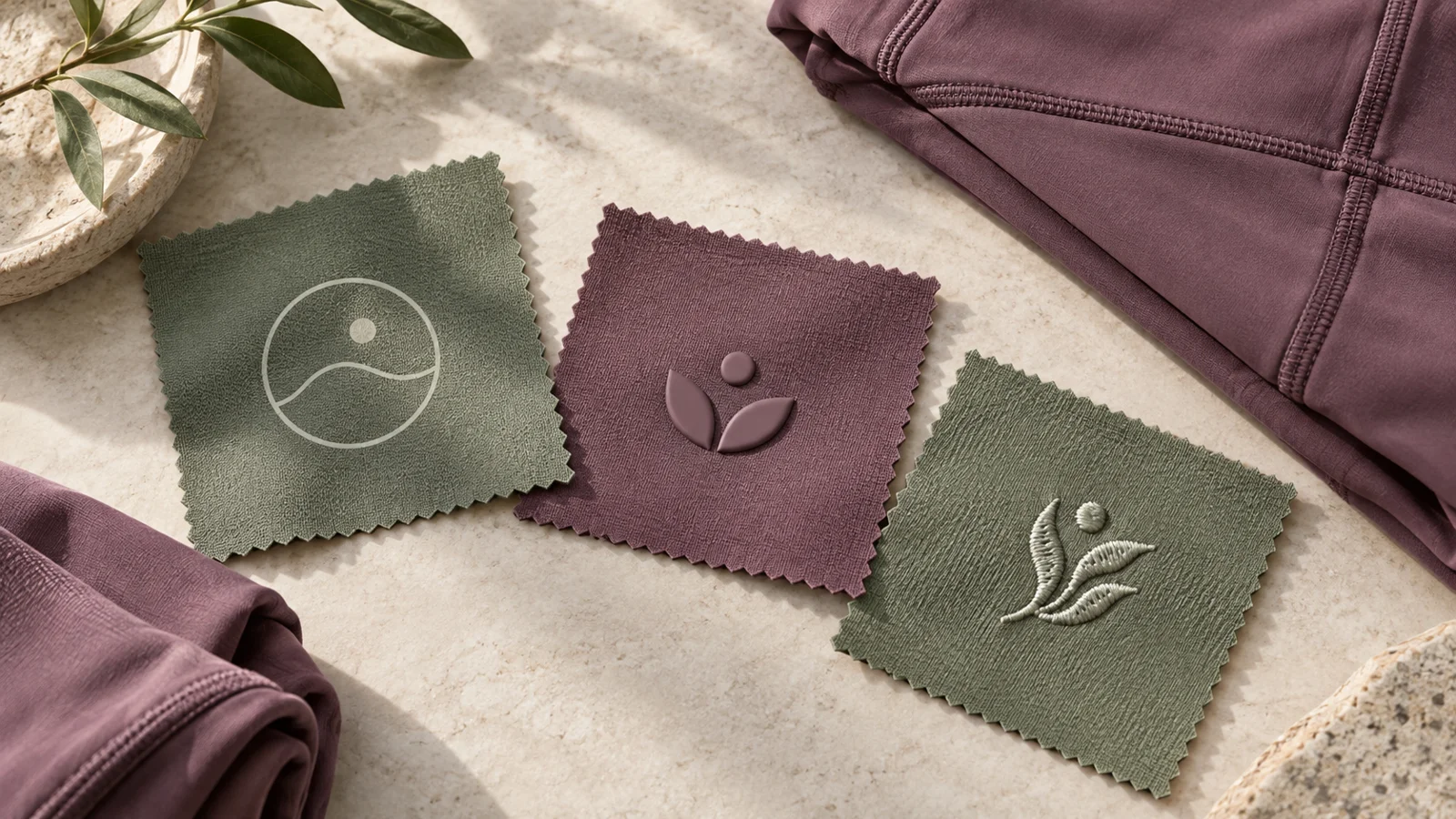
Cover: AI-generated illustration of branding concepts, not finished production samples.
Choose a logo method for the actual garment, fabric and placement. A small waistband mark and a large jacket emblem need different discussions, even when they use the same artwork. Start by describing the finish you want, then review which application can achieve it on the selected material.
For a yoga brand, appearance is only part of the brief. The decorated area also needs to move with the garment, feel acceptable against the body and withstand the agreed care routine. Avery Dennison's performance branding guidance treats flexibility, bonding, washing and friction as connected design considerations.
This guide compares common options so you can prepare a private-label yoga wear brief. It is a selection framework; the suitable process and its availability need confirmation for your design.
Key takeaways
- Heat transfer describes an application process; silicone describes a material. A silicone logo can also be heat applied.
- Compare a decoration on the intended fabric, at its actual size and placement.
- Ask for a complete proposal covering application, backing, comfort and care requirements.
- Keep artwork approval separate from approval of the decorated garment.
Compare the finish before choosing the process
Use a flat transfer when exploring a low-profile graphic, a raised silicone detail when exploring dimension, and embroidery when exploring a stitched texture. These are starting points for a sample discussion, not guarantees that every option will work on every stretch fabric.
| Option to discuss | Visual direction | Main question for development |
|---|---|---|
| Flat heat-applied graphic | A clean mark with little visible relief | Which transfer is compatible with this fabric and the movement at this location? |
| Raised silicone transfer or badge | A dimensional, tonal or contrasting mark | How will it attach, bend and feel at the proposed thickness and size? |
| Direct embroidery | A visibly stitched texture | How will the fabric be stabilized, and what will the reverse feel like? |
Do not treat these as three mutually exclusive manufacturing categories. A badge can contain different materials, and a silicone decoration can be supplied as a heat transfer. Ask the supplier to name both the decoration and the attachment method. That makes later comparisons much clearer than requesting “a premium logo.”
Flat heat transfers: specify the fabric and movement
A heat transfer carries a graphic onto a garment using a specified application process. The transfer system, fabric and application conditions must work together. A familiar logo shape does not tell you whether the same transfer will suit a new fabric.
Avery Dennison's film transfer range illustrates that individual transfer products have their own intended uses and stretch characteristics. Treat product information as specific to that system. It does not establish a universal temperature, wash limit or stretch allowance for all activewear logos.
For a leggings waistband, show the exact placement and whether the mark crosses a seam or sits on a folded edge. Ask to see the proposed logo on the selected material, then review it on the garment in the positions where it will be worn. An undecorated fabric swatch cannot answer that placement question.
Your sample comments should distinguish the graphic from the application. “The artwork is approved; the edge finish needs review” is more useful than “logo approved.” If you change the fabric or finish after that review, ask whether the application needs to be checked again. Our yoga-wear fabric comparison explains which material details to carry into this discussion.
Silicone details: agree the profile and attachment
Describe the amount of relief you want instead of using “silicone” as a complete specification. A low-profile tonal mark and a thick raised badge can produce different appearances and different sensations on a close-fitting garment.
Request a proposal that identifies the material, dimensions, thickness or profile, attachment method and artwork limits. Avery Dennison's screen-print transfer range includes silicone heat transfers, illustrating the overlap. Review that proposal as both a dimensional decoration and a bonded application. A separate badge also needs its attachment and edge treatment defined.
Use the intended placement to judge the result. A raised mark at the back of a waistband needs consideration during floor-based movement; a chest emblem needs consideration where another garment or strap may touch it. These are editorial review prompts, not a claim that a particular thickness or location will pass a comfort test.
Useful sample comment: “Keep the tonal color direction. Please propose a lower-profile version at the same placement, and identify any change in edge detail or attachment.” This is a hypothetical instruction, not a tested YogaSew result.
Embroidery: review the reverse as well as the face
For embroidery, ask how the stitch design and stabilizing materials will work with the selected fabric. Approval should cover the inside of the garment as well as the visible logo.
The development questions include stitch coverage, lettering detail, backing, placement and the effect on the surrounding fabric. Madeira's performance-wear embroidery guidance addresses backing selection, digitizing for stretch fabrics and skin-side comfort. A logo that is clear on a screen may need adjustment when converted into stitches at a small size. Let the embroidery specialist propose that adjustment rather than silently altering your brand artwork.
Examine the sample flat and in its intended wearing position. Record any puckering around the mark, distortion of lettering or discomfort from the reverse. Ask whether a smaller mark, different placement or another process is worth comparing. Do not assume that a woven patch, direct embroidery and a printed graphic will behave identically because the artwork matches.
For custom yoga wear, make this decision while the garment details are still open. Moving a logo later can affect its relationship with panels, pockets or seams that have already been approved.
Send a brief that allows a fair comparison
Send the same artwork, dimensions, garment reference and placement to anyone preparing a proposal. Comparing a small one-color mark with a larger multicolor badge tells you little about the process difference.
| Brief item | What to provide |
|---|---|
| Artwork | Current file, version, colors and any details that must remain unchanged |
| Size | Finished width and height, or one dimension with proportions locked |
| Placement | A drawing with a named reference point and distance from it |
| Fabric | Article reference, composition and known finish; a physical swatch where available |
| Desired finish | Flat or raised, matte or glossy, tonal or contrasting |
| Use and care | Intended activity and the care conditions the decoration needs to support |
| Order plan | Quantities by style and color, plus planned repeat use of the same artwork |
Put these details in the current tech pack. Mark open choices as pending. If two options are being compared, give them separate sample identifiers so comments cannot be applied to the wrong version.
Before deciding, ask what the quotation includes: artwork preparation, any tooling or setup, sample application, the decoration itself and attachment. Check whether a component minimum differs from the garment minimum. The activewear MOQ guide shows how to separate those questions without assuming one number covers everything.
Approve the decorated sample in context
Bring the approved artwork and placement drawing to the sample review. Check visible detail, dimensions, alignment and color direction, then assess the decorated area during relevant movement. Include the inside surface for anything worn close to skin.
Agree how washing and durability will be assessed before using those results as a product claim. Record the material, application and conditions associated with each observation. An attractive photograph proves appearance under those viewing conditions; it does not document adhesion, comfort or wash performance.
Keep the approval specific: the sample identifier, artwork revision, garment fabric, location and agreed process. If one of those changes, ask which checks need repeating. That record gives the next production discussion a clear reference.
FAQ
Is silicone better than heat transfer for activewear?
The terms overlap: silicone can be supplied as a heat transfer. Compare complete proposed systems on the same fabric and placement. The useful differences are the desired appearance, profile, flexibility, attachment and demonstrated behavior under the agreed review conditions.
Can the same logo be used on leggings and sports bras?
The artwork can be shared, but size, placement and application still need review on each garment. Record those differences in each style's specification rather than assuming that approval on one style covers the other.
Is embroidery suitable for stretchy yoga wear?
It is an option to discuss with the developer, with fabric stabilization, stitch design and reverse-side comfort included in the proposal. Suitability should be assessed on a sample at the intended location; “stretch fabric” alone does not settle the decision.
What should I send before asking for a logo quotation?
Send the current artwork, finished size, placement drawing, garment and fabric references, intended finish and order quantities. Identify which decisions are still open so the quotation can state its assumptions.
Discuss your yoga-wear branding
Send your logo and garment reference to YogaSew, with the position and finish you have in mind. We can review the brief as part of your yoga-wear development discussion. Process availability, minimums and timing are confirmed after specification review.
Written by YogaSew, the yoga wear manufacturing brand of Dongguan Jiashun Clothing Co., Ltd.. Sources checked on October 10, 2026. Comparisons and examples are editorial guidance, not a claim that a particular decoration has been tested or is available for every YogaSew style.
About the reviewer
ChengLei Shao is the Brand Manager at YogaSew. ChengLei reviews the brand’s articles before publication.