
Seamless vs Cut-and-Sew Leggings: How to Choose for Your Yoga Brand
By YogaSewReviewed by ChengLei Shao
· Updated
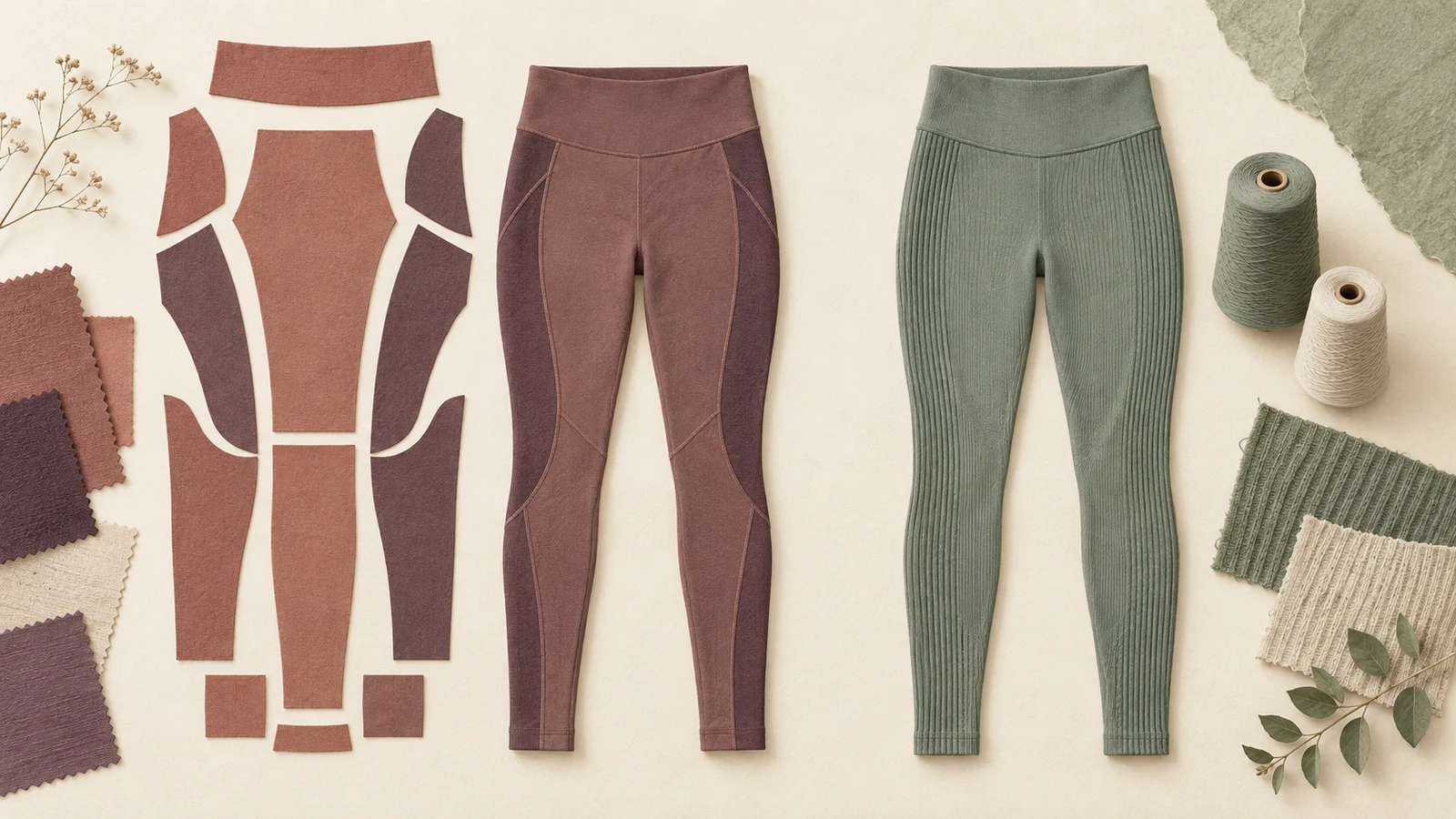
Cover: AI-generated construction illustration.
Start with cut-and-sew when your leggings depend on specific panels, pockets or seam placement. Explore seamless knitting when knitted texture and zones built into the fabric are central to the design. Then check the proposed construction on a sample in your intended fit and size range.
For a yoga brand, this choice shapes what you need to specify and how the product will be developed. A reference photo can show the look you want, but it rarely explains the pattern, yarn, fabric or finishing behind it. Two leggings can look similar and need different development work.
This guide compares the routes for brands preparing a custom yoga leggings brief. The examples are planning scenarios, not tested YogaSew products or customer case studies.
Key takeaways
- Choose the construction around the details your design needs.
- Seamless describes a manufacturing approach; individual garments can still have seams and finishing operations.
- Neither route proves comfort, opacity or recovery. Review the actual sample.
- Compare quotes against the same brief, including quantities by style and color.
Jump to: Construction comparison · Sample checks · Inquiry checklist
Seamless vs cut-and-sew leggings at a glance
Use this table to identify what to discuss with your manufacturer. The final choice depends on the proposed design and production setup.
| Decision | Cut-and-sew | Seamless knitting |
|---|---|---|
| Starting point | Fabric is cut into pattern pieces and sewn together. | Yarn is knitted into shaped or tubular garment sections. |
| Main design controls | Pattern shape, panel layout and seam placement. | Knit structure, yarn selection and the knitting program. |
| Pockets and panels | Include their shapes, positions and construction in the pattern brief. | Ask how each added feature will be made and attached. |
| Texture | Select a fabric and finish, or combine materials in panels. | Explore texture within the knit, subject to the proposed setup. |
| Fit changes | Discuss pattern and measurement adjustments alongside fabric behavior. | Discuss sizing, knit settings and yarn behavior together. |
| Seams to review | Check each join for position, bulk and stretch. | Ask which joins and finishing operations remain. |
| Sample approval | Approve fit, movement, appearance and agreed performance checks. | Approve the same criteria, including placement of knitted zones. |
| Quote questions | Confirm fabric, cutting, sewing, trims and development scope. | Confirm yarn, knitting development, finishing and assembly scope. |
What changes in the manufacturing process?
Cut-and-sew starts with fabric and a pattern
The manufacturer cuts fabric into pieces, then joins them into the garment. The pattern defines the leg shape, rise, waistband and any added panels. This makes cut-and-sew a useful starting point for designs with a shaped pocket, contrast panel or specific seam layout.
FittDesign's comparison of leggings construction describes this fabric-to-pattern-to-assembly process and its options for combining fabrics and design details. It also explains the tubular knitting approach used for seamless leggings.
The sewing specification matters as much as the visible seam line. Thread supplier Coats describes leggings seams in terms of stretch, strength and comfort. For your brief, identify where a seam will contact the body and ask to assess it during movement. A neat seam in a flat photograph has not yet shown how it behaves when worn.
Seamless starts with yarn and knitting development
In circular seamless knitting, the machine creates garment sections from yarn, with structures developed through the knitting program. Santoni's SM8-TOP2V is one example of an electronic circular machine used for seamless sportswear. Its technical sheet describes controls for stitch formation and yarn selection.
For a buyer, the practical question is which parts of the design can be knitted into the proposed garment and which need additional operations. Ask the supplier to mark every remaining seam, opening and attachment on the drawing. The word “seamless” alone does not provide that construction map.
A ribbed waistband or textured leg panel should be specified by its position and intended effect. Its appearance does not establish a compression level or prove support. YogaSew's seamless activewear development page is the service starting point for discussing that route; the machine references above explain the technology, not YogaSew's equipment ownership.
Choose a route from the design brief
Describe the features you need to preserve before choosing a construction label. These three example briefs show how to start the discussion.
A legging with a phone pocket and contrast panels
Begin by exploring cut-and-sew. Draw the pocket opening, the intended phone position and the boundaries between colors. Include a reference for the waistband and the finished leg length.
During sampling, check whether the loaded pocket pulls on the leg and whether the seams sit where intended. If a supplier proposes a seamless version, ask for a drawing showing how the pocket and contrast areas would be made. Compare the proposed result with your original brief before accepting a change.
A legging built around knitted texture
Explore seamless knitting when the defining feature is a pattern or texture built into the knit. Mark where each zone starts and stops, and distinguish decorative texture from any support or stretch requirement.
Review those zones on the body, including their position across the size range. A texture that looks balanced on a flat sample may sit differently when stretched. Ask for a proposed yarn and construction, then assess the resulting garment before writing performance claims.
A plain legging with a very specific fit
Keep both routes open at the brief stage. Send a reference garment with notes on the rise, waist feel, leg length and areas you want to change. Define the fit requirements clearly enough that suppliers can explain how they would meet them.
If you want to change one area without altering the rest, ask how that correction would be made in each route. Base the decision on the proposed development work and sample result. The absence of visible decoration does not make a product simple to fit.
Approve fit and fabric behavior together
Approve the sample as a garment, using the material, color and fit intended for the order. A construction name cannot tell you whether the waistband stays in place or whether a light color provides the coverage your customer expects.
Start the fabric discussion with a physical reference where possible. Then agree a sample review that covers:
- Fit and movement. Check the rise, waist, crotch and leg length while standing, sitting and moving through the intended activity. Record where the garment pulls, slips or restricts movement.
- Opacity. Review coverage at the intended fit and stretch, under agreed lighting, for the relevant colors and sizes. Do not approve a whole range from a photograph of one dark sample.
- Seams and attachments. Examine the waistband, crotch, hems and pockets. Check the inside as well as the outside, and note any rubbing or pressure during wear.
- Recovery and care. Agree how to assess shape and appearance after stretch and washing. Record the care procedure so a later sample can be compared on the same basis.
Formal testing should follow the claims and requirements of the product. Intertek's high-performance testing service lists stretch and recovery, drying and breathability among the properties it can assess. Ask for the relevant method, acceptance criteria and report scope when such performance matters to your range. An informal wear check and a laboratory result answer different questions.
Keep one revision list for each sample. Separate fit corrections from changes to fabric, color or design, and make clear which version is approved. Our sample development process explains the progression from brief review through revisions and approval.
What affects MOQ, cost and lead time?
Ask for a quote for your actual specification, with the minimum order broken down by style and color. A total collection quantity does not show how many units share the same material, construction or setup.
For cut-and-sew, discuss the proposed fabric and its availability, pattern work, cutting, sewing operations and trims. For seamless, ask about yarn requirements, knitting development, color processing, finishing and any additional assembly. These are quote questions to resolve for the project, not a fixed price ranking between the routes.
Make the sample scope explicit. Does the proposal cover an existing design with limited changes, or a new construction? Which revisions are included? When will colors and size requirements be reviewed? What must be approved before bulk work begins?
Compare the same brief. A quote for an existing style with a logo change is not equivalent to a quote for new fit development, a custom knit structure and multiple sample revisions.
YogaSew applies the same starting minimum per style and color to both construction routes. Our sampling page gives the published cut-and-sew timing, design-based sample pricing and sample-fee credit conditions. Seamless timing remains specific to the project. Provide your target arrival date and destination so production and shipping can be planned separately.
A checklist to send with your inquiry
Use the following as a starting brief. Write “need guidance” beside anything you have not decided; a clear open question is more useful than an assumed specification.
- Product and use: yoga leggings, intended activity and target customer.
- Design reference: your sketch, tech pack or reference photos, with notes on the details to retain or change.
- Construction: cut-and-sew, seamless, or a request to compare both.
- Fit and sizes: size range, sample size, measurements where available, rise and leg-length preferences.
- Material direction: swatch or garment reference, desired hand feel, stretch and coverage requirements.
- Design details: pockets, panels, knit texture, waistband, logo position and finishing.
- Color and quantity: proposed colors and planned units by style and color, with a size breakdown if known.
- Commercial requirements: destination, target timing, labeling, packing and any required test documentation.
Example note for a brief: “The side pocket and high waistband are essential. The decorative seam can change. We need help selecting a material and confirming the construction.” This tells the manufacturer which choices are open without suggesting that a photo is a complete production specification.
Frequently asked questions
Do seamless leggings have any seams?
They can. Seamless knitting reduces the need for some seams, while the final garment can still need joining and finishing. Ask for the exact construction drawing and inspect the inside of the sample.
Are no-front-seam leggings the same as seamless leggings?
No. “No front seam” describes a design detail. It does not identify how the rest of the garment was made. Ask whether the leggings are cut and sewn from fabric or developed through seamless knitting.
Which route is better for a small first order?
Ask suppliers to assess the same design and quantity breakdown. Available materials, existing designs, customization and development scope affect feasibility. Do not assume either route has a universal minimum, or that an advertised starting quantity applies to every color and style.
Can a yoga collection use both constructions?
Yes, you can plan different styles around different routes. Review each style's development needs separately and compare colors, hand feel and branding together before treating them as one coordinated collection.
Discuss the construction for your leggings
Once you have a construction direction, use our guide to choosing a yoga wear manufacturer to compare supplier responsibilities, quotations and sample evidence for the same brief.
YogaSew supports cut-and-sew and seamless yoga wear development from a reference or tech pack. Send your design reference, size range and target quantity through our project inquiry form to discuss construction and sampling. If the route is still open, identify the design details that matter most and ask us to review the options.
Written by YogaSew, the yoga wear manufacturing brand of Dongguan Jiashun Clothing Co., Ltd. Technical sources reviewed October 7, 2026.
About the reviewer
ChengLei Shao is the Brand Manager at YogaSew. ChengLei reviews the brand’s articles before publication.