
How to Choose a Yoga Wear Manufacturer: A Buyer's Comparison Guide
By YogaSewReviewed by ChengLei Shao
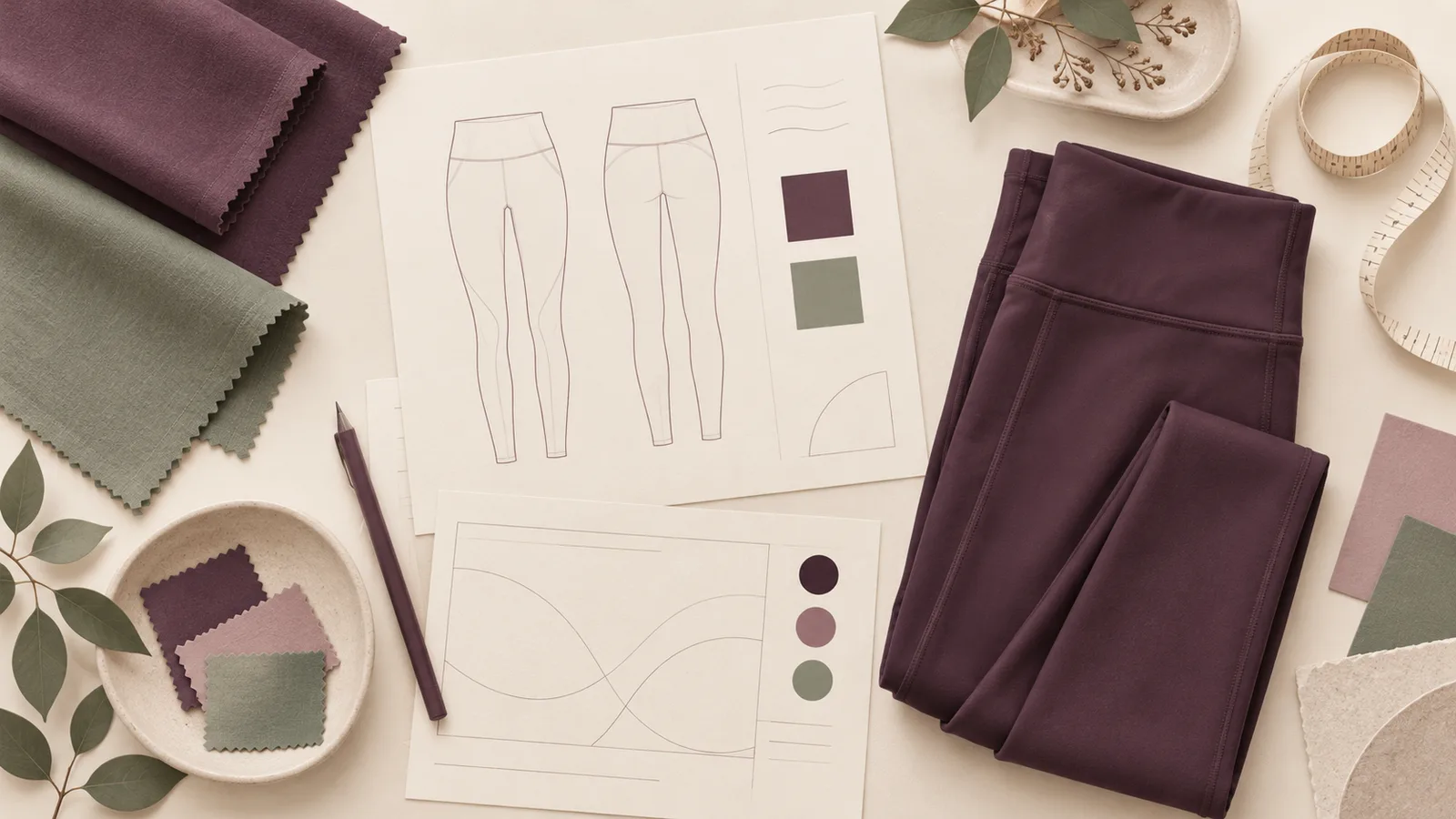
Choose a yoga wear manufacturer by matching its demonstrated production capability to your design, confirming who will do the work, and comparing samples and quotations against the same written brief. A catalog photograph, a country name or a low starting MOQ cannot answer all three questions.
Publisher disclosure: YogaSew publishes this guide and offers custom OEM and private-label yoga wear. This is a supplier-selection framework, not an independent ranking or a named manufacturer shortlist. The cover is an AI-generated editorial illustration, not a photograph of our factory.
For a brand preparing leggings, sports bras or a coordinated collection, the first useful decision is what the supplier must help you solve. You may need pattern development from an original design, changes to an existing reference, or coordination across several garment types. Write down that need before collecting quotes.
Key takeaways
- Compare three separate things: production method, business role and production location.
- Ask who develops the sample, performs each production stage and approves changes.
- Send every candidate the same specification and quantity breakdown.
- Choose the next development step only after reviewing evidence and recording unresolved points.
Jump to the supplier comparison, evidence checklist or inquiry template.
1. Define the project before comparing suppliers
A useful shortlist starts with a clear buying brief. State the garment, intended use, design changes, size range, color plan, quantities and delivery destination. Separate requirements you have already decided from questions you want the supplier to answer.
For example, “studio leggings with a high waistband, an inside key pocket and an original fit” is more useful than “premium yoga wear.” Add a drawing or reference and identify what it explains. A reference image can communicate appearance; it does not establish the fabric specification, stitching, fit or performance of the proposed garment.
If your drawings are ready, use the leggings tech pack checklist to organize measurements, materials and revision notes. Techpacker's explanation of a tech pack describes these as connected parts of the development document. If they are incomplete, label the gaps and ask whether development help is included in the proposed service.
Keep three decisions visible:
- Fixed: features the supplier must preserve, such as pocket position or an agreed logo size.
- Open: choices for review, such as fabric options or a construction proposal.
- To verify: results that need a sample or test, such as coverage during movement or logo durability after washing.
This brief becomes the reference for your supplier comparison. When it changes, send the revised version to every candidate still under consideration.
2. Separate production method, supplier role and location
“Seamless factory,” “sourcing agent” and “US manufacturer” describe different aspects of a business. They are not mutually exclusive categories. An agent can coordinate seamless production, and a factory in the United States can specialize in cut-and-sew garments.
Compare each candidate on all three dimensions:
| Dimension | Options to discuss | Evidence to request |
|---|---|---|
| Production method | Cut-and-sew, seamless knitting, or a collection using both | Relevant samples and an explanation of how your design would be developed |
| Business role | Factory, trading company or sourcing agent | Who contracts with you, where work happens and who handles changes or defects |
| Production location | China, your home market, or another location | Actual production address, material origin where relevant and a delivery plan |
Cut-and-sew capability
Consider this route when the design depends on shaped panels, specified seam positions, pockets or a pattern you want to develop. Ask to see comparable work and discuss the proposed fabric and seam construction together. A factory's ability to sew a garment does not establish that its sample meets your fit or stretch requirements.
Use the seamless vs cut-and-sew guide for the construction comparison. In supplier selection, the next question is who can translate that choice into a repeatable, documented sample.
Seamless knitting capability
Ask how knitted zones, garment dimensions and finishing details will be developed. Santoni, an equipment manufacturer, describes its circular electronic seamlesswear knitting technology; this is a different production starting point from cutting garment panels from fabric.
A machine photograph alone does not demonstrate ownership, available capacity or suitability for your project. Request an explanation of the proposed process, the development team involved and the parts that will still need assembly or finishing. Confirm whether knitting happens at the contracting company's facility or at a disclosed partner.
Factory, trading company or sourcing agent
A direct factory relationship can suit a buyer who wants to work with the production team on a defined garment. A trading company or agent can be useful when the brief spans suppliers or requires coordination. In either case, the comparison should establish responsibility: who communicates technical changes, who approves substitutions and who resolves a failed inspection?
Do not assume every stage happens inside one building. The OECD's garment and footwear due diligence guidance addresses subcontracting and the need for due diligence on subcontractors. Ask candidates to identify the stages handled elsewhere and explain how those partners are reviewed.
Domestic or overseas production
For a US or European brand, a local producer may make visits and sample exchanges easier to arrange. Verify that practical advantage against the actual facility and your location. Ask whether fabric, trims or other inputs still need to be imported.
For a producer overseas, document how sample dispatch, feedback, inspection and delivery will work. Compare the total quoted scope and timetable for your destination. Country alone does not establish quality, price, minimum quantity or delivery reliability.
3. Ask for evidence that matches your garment
Use a supplier call to connect claims to specific work. Ask the candidate to explain a comparable sample: which construction choices matter, what would change for your brief, and which questions remain open. A clear technical discussion is more useful than an unrelated showroom tour.
| Check | Ask to see or confirm | What it helps establish |
|---|---|---|
| Production route | A stage-by-stage explanation with locations | Where your garment would be developed and made |
| Relevant work | Comparable construction and finishing details | Whether the examples address your actual design |
| Development ownership | The person handling specifications and revisions | How questions and sample changes will be controlled |
| Quality checks | Proposed inspection points and acceptance criteria | What will be checked and how results will be recorded |
| Outside processes | The stages assigned to other facilities | Which responsibilities need to be agreed across companies |
For leggings, bring questions about the waistband, gusset, pockets, seams and coverage. For a sports bra, ask how the proposed band, straps, cups and size range will be assessed. Describe the intended use without treating an appearance or a support label as a test result.
Check certification claims separately. OEKO-TEX STANDARD 100 concerns textiles tested for harmful substances. Its label does not answer your questions about garment fit or supplier delivery. Hohenstein's STANDARD 100 FAQ explains that the product must fall within the certificate's scope. Request the certificate number, check validity with the issuing scheme and confirm which material or product it covers.
Keep an evidence note: record the claim, the document or sample reviewed, the date and what remains unverified. A certificate shown for one fabric should not become a claim about every product in your collection.
4. Compare quotes on the same scope
Send each shortlisted supplier the same brief and ask them to state assumptions. Comparing a basic garment quote with a quote that includes development, branding and packaging will not tell you which proposal fits your project.
Your comparison sheet should include:
- Style revision, construction, fabric proposal and components.
- Quantities by style, color and size; whether a set is counted as pieces or complete outfits.
- Development and sample charges, included revisions and sample shipping.
- Logo application, labels, packaging and any separately charged work.
- Production timing, the event that starts it and required buyer approvals.
- Inspection arrangements, delivery destination and what shipping costs are included.
- Payment stages and the agreed process for handling specification changes.
Use the activewear MOQ guide to clarify the quantity conditions. A total collection quantity does not tell you whether each style or color meets the supplier's requirement. Ask for those conditions in writing before reorganizing an order around a headline minimum.
Discuss fabric options using the same desired feel and sample checks. The nylon vs polyester guide helps prepare that conversation. Fiber names alone do not make two fabric proposals equivalent.
A comparison example
Suppose one hypothetical offer covers an existing reference with your logo, while another includes a new pattern and an original pocket layout. The second proposal includes different work. Request a quote for the same design scope, or decide whether adapting a reference meets your launch needs. Record the change before comparing prices again.
5. Use the sample to decide the next step
Agree the sample's purpose before ordering it. A fabric swatch, a fit sample and a finished sample with branding answer different questions. Identify what the sample will represent, which materials are provisional and which details must be approved later.
Review it against the current brief. Record measurements using an agreed method, assess the intended movement and fit, and inspect construction and branding. Specify wash and wear checks relevant to the garment. If you need a laboratory claim, agree an appropriate test and its acceptance criteria with the supplier and testing provider.
Keep one consolidated revision record with photographs and clear decisions. “Waist feels loose” describes a problem; it still needs an agreed correction and another check. Avoid silently treating a revised sample as approved because the supplier has sent it.
Before authorizing bulk production, confirm:
- The approved garment, material and artwork revisions are identifiable.
- Sample substitutions and unresolved details have been addressed.
- Size, color and quantity breakdowns match the order.
- Inspection criteria, change approvals and delivery responsibilities are recorded.
A successful sample supports the decision to proceed. It does not remove the need for production checks. Ask how the approved reference will be used during production and what happens if materials or components need to change.
6. Copy this supplier inquiry checklist
Use these prompts in your first inquiry. Replace each field with your project information and leave unknowns clearly marked for discussion.
Project brief
- Garment and intended use:
- Reference or tech pack, including revision:
- Features to retain and changes required:
- Preferred construction and open questions:
- Fabric direction, colors and size range:
- Planned quantity by style, color and size:
- Branding and packaging requirements:
- Delivery destination and target arrival date:
Please confirm
- Which development and production stages would you handle, and where?
- Which stages would use outside partners?
- What comparable work can we review?
- What is included in the sample and quotation, and what is excluded?
- What quantity conditions and approvals affect the schedule?
- How would revisions, inspections and substitutions be handled?
Use the responses to choose a manageable shortlist for further review. Keep “confirmed,” “pending” and “not suitable” separate. A fast answer to an incomplete brief is not the same as a confirmed production proposal.
Frequently asked questions
Do I need a factory that owns every production stage?
You need a clear account of who performs each stage and who is responsible for the result. Ask where development, garment production, decoration and packing occur. If a partner is involved, establish how specifications, checks and changes will be communicated before approving the work.
Can I compare suppliers before my tech pack is complete?
Yes. Share the reference, intended use, required changes and quantity plan, then mark what is still undecided. Ask which development services the candidate provides and what information it needs for a firm quote. Compare those services as part of the proposal.
Should I choose the supplier with the lowest MOQ?
Use MOQ as one condition in the decision. Confirm whether the quantity applies per style, color or other grouping, then compare the development scope, material choices and sample results. A minimum that fits your budget is useful only if the proposed garment also fits your brief.
Does a matching catalog photo prove a supplier can make my design?
No. Treat it as a starting point for discussion. Ask which parts of the design the supplier proposes to reproduce or change, what materials it would use and what a sample must verify. Catalog images do not establish tested performance or confirmed production specifications.
Discuss your manufacturing brief with YogaSew
YogaSew is the yoga wear brand of Dongguan Jiashun Clothing Co., Ltd. in China. We manufacture custom OEM and private-label yoga wear for brands. Project requirements still need review against your chosen construction and customization.
For custom yoga wear development, prepare your reference or tech pack, quantity breakdown and delivery destination. Send your project brief with the decisions that are fixed and the questions you want us to help resolve.
Source check: the linked technical and certification guidance was reviewed on October 14, 2026. These sources explain processes and verification; they do not certify or endorse YogaSew.
About the reviewer
ChengLei Shao is the Brand Manager at YogaSew. ChengLei reviews the brand’s articles before publication.