
Flatlock vs Overlock Seams in Activewear
By YogaSewReviewed by ChengLei Shao
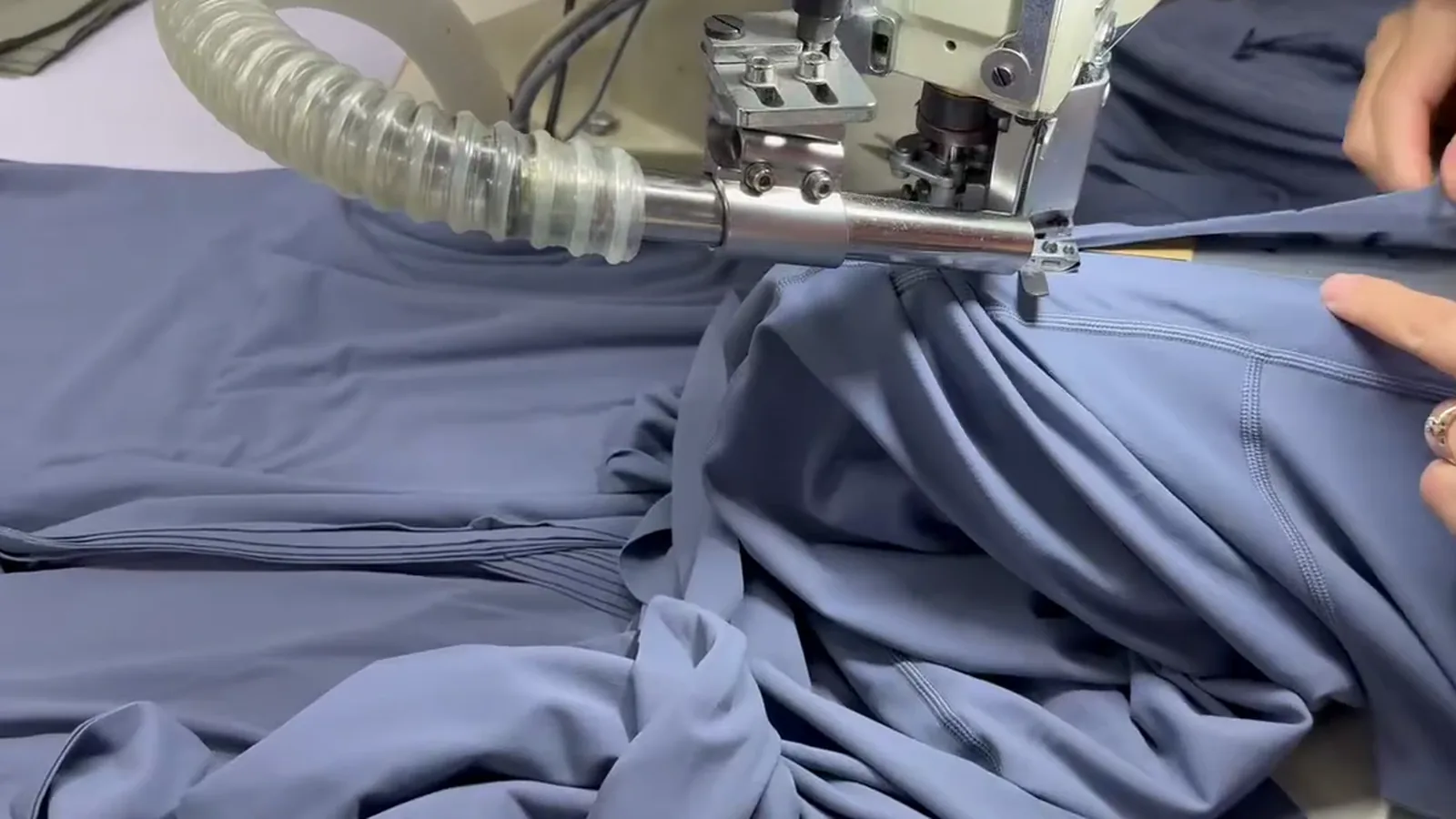
A flatlock seam lies flat on both sides of the fabric. An overlock seam leaves a ridge of seam allowance on the inside. That difference decides where each is used in activewear: flatlock where a seam presses against the skin under tension, overlock where a little bulk inside the garment does no harm.
This guide explains how the two seams are built, how to recognise them, and what to specify for a custom activewear order.
Key takeaways
- Flatlock joins two panels edge to edge, or with a very small overlap, and covers the join with thread on both faces. There is no seam allowance standing up inside.
- Overlock sews two layers together at the edge and wraps the raw edges with thread. The allowance stays inside the garment as a narrow ridge.
- Flatlock is visible on the outside, so thread colour and seam position become part of the design.
- Name the seam type for each seam in the tech pack, and check the seams on a worn sample.
What is a flatlock seam?
In a flatlock seam the two fabric edges meet or overlap slightly, and several needles with looper threads stitch across the join. The threads cover the raw edges on both faces. The finished seam is about as thick as the fabric itself.
You can recognise it by looking at both sides: each shows a wide band of stitching, and there is no flap of fabric to fold over.
What is an overlock seam?
In an overlock seam the two panels are placed face to face and stitched along the edge, while the machine trims the edge and wraps it with thread. Opened out, the garment shows a clean line on the outside and a ridge of wrapped seam allowance on the inside.
Overlock, also called serging, is the standard way to join knit panels. On activewear it is often combined with a coverstitch on top, which holds the allowance flat to one side and adds parallel rows of stitching on the outside.
How do flatlock and overlock compare?
| Flatlock | Overlock | |
|---|---|---|
| How the panels meet | Edge to edge or a small overlap | Face to face |
| Inside of the garment | Flat | A ridge of seam allowance |
| Outside of the garment | A visible band of stitching | A plain seam line |
| Role in the design | Decorative; thread colour matters | Usually hidden |
| Typical positions in activewear | Leg and body seams on tight garments | Looser garments, internal joins, seams finished with a coverstitch |
Where does each seam belong in activewear?
Use flatlock where a seam runs over an area that moves and rubs: the inner leg and side seams of leggings, the panels of a fitted top, the side seams of a sports bra. A flat seam is less likely to press a line into the skin or chafe during repeated movement.
Overlock is suitable where the garment sits away from the body or the seam is not under pressure, such as relaxed tops, joggers and shorts with a loose leg. It is also used inside waistbands and other joins that are later covered.
Many garments combine both. If you want to avoid seams in certain areas altogether, compare seamless and cut-and-sew construction.
What should you write in the tech pack?
- The seam type for each seam. Mark flatlock, overlock, or overlock with coverstitch on the technical drawing, seam by seam. “Flat seams” alone can be read in more than one way.
- Thread colour. Flatlock shows on the outside. State whether the thread matches the fabric or contrasts with it.
- Seam positions. Because flatlock is visible, the seam lines are style lines. Draw them where you want them to be seen.
The leggings tech pack checklist covers the other construction details to include.
What should you check on the sample?
- Turn the garment inside out and run a hand along each seam. Note any seam that feels raised or rough.
- Stretch each seam along its length and across it. The stitching should stretch with the fabric and recover without broken or loose threads.
- Look at the seam junctions, such as the crotch point and the underarm, where several seams meet and thickness builds up.
- Wear the sample through the movements it is made for, then check where the seams left marks.
Record the result with the other points in the sample approval checklist.
Seams at the factory that makes YogaSew orders
YogaSew orders are made at Dongguan Jiashun Clothing. Flatlock sewing is available at that factory, alongside overlock, coverstitch and bartack sewing. We agree the seam type for each seam from your tech pack and review it on the sample before bulk production.
FAQ
Is flatlock stronger than overlock?
It depends on the fabric, the thread and how the seam is set up, so we do not state a general ranking. Judge the seam on a sample by stretching it and wearing the garment.
Can you tell flatlock from coverstitch on the outside?
They can look alike from the outside, since both show parallel rows of stitching. Look inside: a coverstitched overlock seam still has seam allowance folded to one side, while a flatlock seam has none.
Do all leggings need flatlock seams?
No. It is a design and comfort decision for each style. State the seam type you want, and confirm it on the sample.
About the reviewer
ChengLei Shao is the Brand Manager at YogaSew.