
Sublimation vs Heat Transfer for Activewear: How to Choose
By YogaSewReviewed by ChengLei Shao
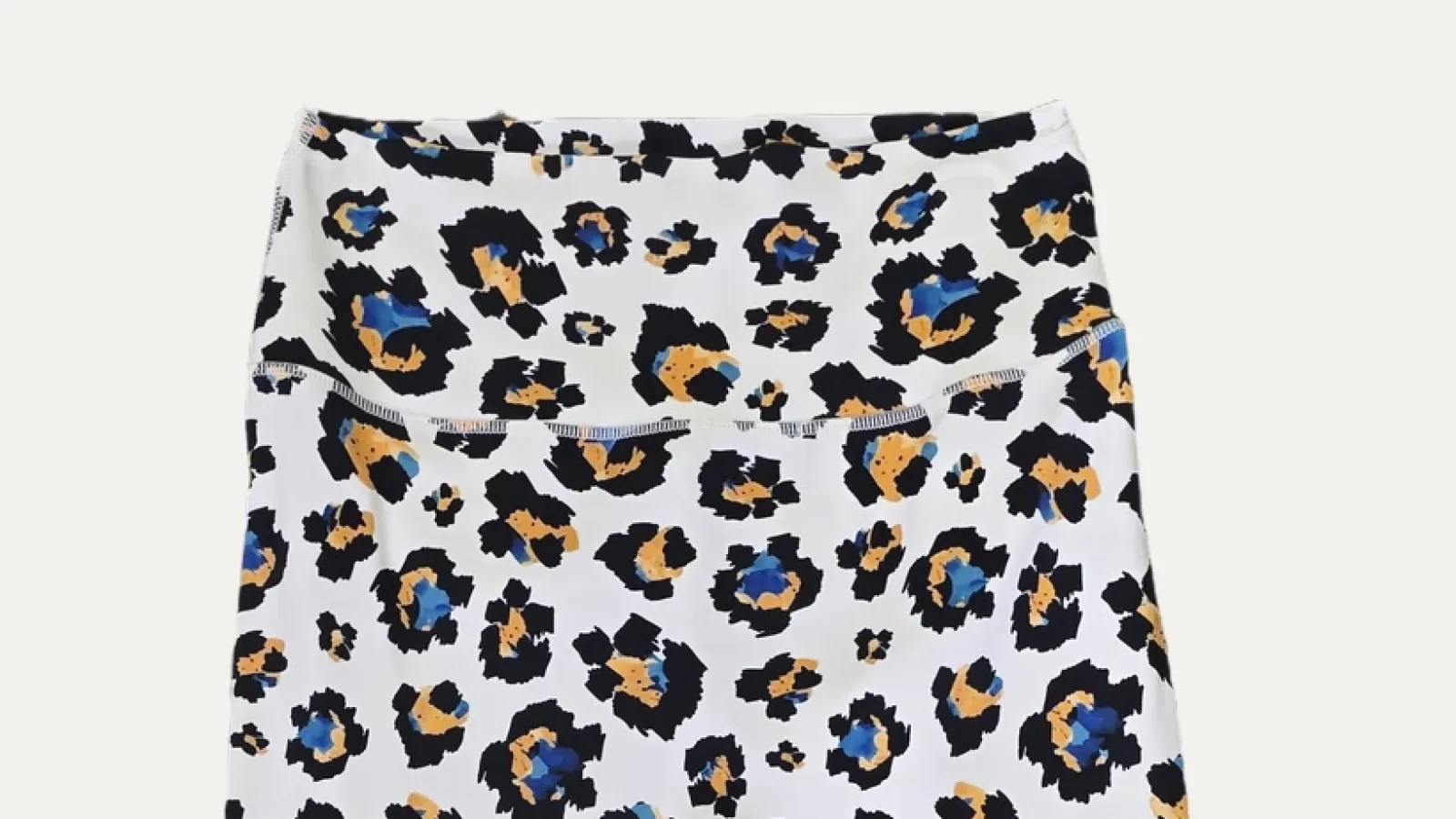
Sublimation colours the fibre; a heat transfer adds a layer on top of it. That one difference decides most of the choice. Sublimation suits all-over artwork on light polyester-rich fabric. A heat transfer suits a logo or a placed graphic, and it can be matched to more fabrics and to dark colours.
Both processes use a heat press, which is why the two names are often mixed up. This guide separates them so that you can brief a custom activewear project with the right question for each design. It is about printed artwork and colour. If you are choosing between a transfer logo, a silicone detail and embroidery, read the activewear logo methods guide instead.
Key takeaways
- Sublimation is a dye process for polyester and polyester-rich fabric with a white or light base. It adds no layer you can feel.
- A heat transfer is a printed layer bonded to the fabric surface. It can be chosen for nylon blends and dark colours, and it has an edge and a feel.
- “Fully sublimated” means the whole garment is printed as flat panels before sewing.
- Decide by fabric first, then by coverage, then by the look and feel you want. Confirm the result on a sample of the actual fabric.
What is the difference between sublimation and heat transfer?
In dye sublimation, the artwork is printed onto transfer paper and then pressed against the fabric with heat. The dye moves from the paper into the polyester fibre and becomes part of it. Nothing sits on the surface afterwards, so the printed area keeps the fabric's own feel and stretch.
A heat transfer is a separate printed layer, made on a film or carrier and bonded to the garment with heat and pressure. Direct-to-film (DTF) printing is one way of making such a transfer. The layer stays on the surface: it has an outline, a thickness and its own response to stretching.
| Sublimation | Heat transfer | |
|---|---|---|
| Where the colour ends up | Inside the fibre | In a layer on the surface |
| Fabric to start from | Polyester or polyester-rich | Matched to the transfer; more fabrics are possible |
| Base colour | White or light | Light or dark |
| White in the artwork | Not printed; white is the unprinted fabric | Can be part of the transfer |
| Typical use | All-over prints, colour-blocked panels | Logos, placed graphics, small text |
| Feel on the garment | The fabric's own | A layer you can feel; depends on the transfer |
Which fabrics suit sublimation?
Sublimation depends on polyester. Epson's digital textile printing primer identifies white or light-coloured polyester and predominantly polyester blends as suitable substrates for transfer dye sublimation. The dyes are transparent, so they need a light ground to show their colour, and they cannot produce white.
This matters for activewear because many leggings and bras are made in nylon and elastane blends. If the collection is built on a nylon fabric, sublimation is usually the wrong starting point for it. Either choose a polyester-rich fabric for the printed styles or discuss a different printing route with the manufacturer. Our nylon vs polyester guide covers the fabric side of that decision.
One point to review on a stretch fabric: the print is applied to the fabric at rest. On a white-ground fabric, a dark print can look lighter when the fabric is stretched over the body, because the undyed parts of the knit open up. Check this on the sample in the tightest areas, such as the seat and knees.
What does “fully sublimated” mean?
A fully sublimated garment is printed as flat panels before it is sewn. Every panel carries its final artwork, including background colours, colour blocks, patterns and logos, and the pieces are then cut and assembled. There is no base fabric colour apart from what the print leaves unprinted.
For a buyer, this changes what you supply and what you approve:
- Artwork per panel. The design is laid out on the pattern pieces, so placement across seams is part of the artwork. See the printed-leggings sampling guide for how to mark scale and placement.
- Colour. The printed colour is approved on the actual fabric after pressing, not on screen or on paper.
- Inside and edges. The reverse of the fabric and the seam allowances stay the base colour. Ask to see how that looks at hems, waistbands and necklines when the garment stretches.
When is a heat transfer the better choice?
Choose a heat transfer when the design is a mark on a garment, not the colour of the garment itself.
- A logo at the waistband, chest or leg.
- A graphic on a dark or solid-dyed garment.
- A design on a nylon and elastane fabric, using a transfer chosen for that fabric.
- Small text such as a size or care mark printed inside the garment.
The transfer has to be matched to the fabric and to the movement at that location. Avery Dennison's performance branding guidance treats flexibility, bonding, washing and friction as connected considerations. A large solid transfer on a high-stretch area also changes how that area feels and breathes, so size and placement belong in the brief. The logo methods guide compares flat transfers with silicone details and embroidery.
How should you choose for one collection?
Work through three questions in order.
- What is the fabric? A polyester-rich, light-ground fabric keeps sublimation available. A nylon blend or a dark dyed fabric points to a transfer for any printed element.
- How much of the garment is printed? Edge-to-edge artwork is a sublimation discussion. A placed mark is a transfer discussion. Many collections use both: sublimated printed styles alongside solid styles with a transfer logo.
- What should it look and feel like? If the print must be undetectable to the hand, that favours sublimation. If you want an opaque white, a metallic or a raised effect, ask which transfer can deliver it.
Then send the artwork, the intended fabric and base colour, and a marked-up placement for each style. Ask the manufacturer to name the process proposed for each design, and approve it on a sample made in the bulk fabric.
Printing at the factory that makes YogaSew orders
YogaSew orders are made at Dongguan Jiashun Clothing. DTF, DTG and sublimation printing are available at that factory. Which process suits a design depends on the actual fabric and artwork, so we review it on a sample before bulk production.
FAQ
Is sublimation a type of heat transfer?
Both use heat and pressure, and sublimation paper is sometimes called a transfer. The results differ: sublimation leaves dye inside the fibre, while a heat transfer leaves a layer on the surface. When you brief a manufacturer, name the result you want as well as the process.
Can you sublimate nylon and spandex leggings?
Transfer dye sublimation is designed for polyester and polyester-rich fabric. For a nylon and elastane fabric, ask the manufacturer which printing route they propose for that material, and review it on a sample.
Can sublimation print on black fabric?
No. The dyes are transparent and need a white or light ground. A black sublimated garment is a white fabric printed black, so check how it looks when stretched.
Which is better for a small logo?
A heat transfer is the usual starting point for a small logo, because it can be placed on a finished solid-colour garment. On a fully sublimated style, the logo can be part of the printed artwork.
About the reviewer
ChengLei Shao is the Brand Manager at YogaSew.